Detection of 11 Types of Skin Cancer with AI Achieving 99.93% Accuracy
A comprehensive article on Medicali AI and innovative methods for detecting 11 types of skin cancer using artificial intelligence with 99.93% accuracy.
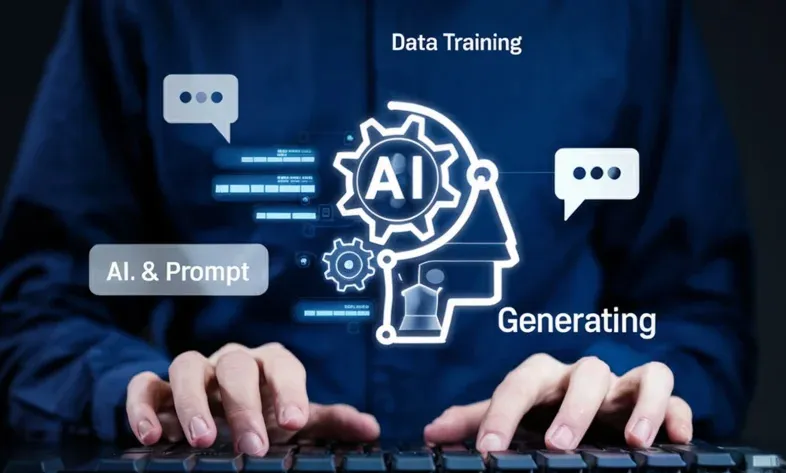
What is an AI Prompt Engineer, what skills do they have, and how can you enter the field of Prompt Engineering? This is a comprehensive, practical, and future-oriented guide.
Prompt Engineering is one of the newest yet most impactful roles in the world of
artificial intelligence, which has gained significant importance with the rise of large language models such as ChatGPT, Claude, and Gemini.
Unlike many traditional technology roles, this position does not necessarily require a specific university degree. Instead, it relies heavily on skill, deep language understanding, and structured thinking.
A Prompt Engineer is someone who knows how to guide AI models toward more accurate, useful, and reliable outputs by carefully designing textual instructions.
This skill plays a critical role across many businesses, from content creation and software development to data analysis and even managerial decision-making.
In this article, we take an in-depth and comprehensive look at what an AI Prompt Engineer truly is, the skills required, the learning path, its advantages and challenges, and the direction in which this profession is heading.
If you are interested in the world of artificial intelligence, this article can be an excellent starting point for you.
Artificial intelligence is no longer a futuristic concept; it has become an integral part of our personal and professional lives.
Along the way, new roles have emerged that did not even exist a few years ago, and Prompt Engineer is one of the most important among them.
This profession sits precisely at the intersection between humans and machines.
You might think that working with tools like ChatGPT is limited to simply writing a basic question, but the reality is that the quality of AI output depends heavily on the quality of its input.
This is where the Prompt Engineer comes into play, optimizing model performance through intelligent prompt design.
An AI Prompt Engineer is someone whose primary expertise lies in designing, testing, and optimizing prompts—textual instructions—for large language models.
The goal is to obtain the best and most accurate possible output from AI systems without necessarily engaging in heavy coding.
Contrary to common belief, Prompt Engineering is not just about “asking good questions.” It involves understanding the structure of language models, recognizing their limitations, managing errors, and guiding the model toward the correct response path.
A professional Prompt Engineer knows how to define roles, tone, structure, and constraints within a prompt.
This role can take many forms, from collaborating with technical teams and startups to supporting content creation, data analysis, product design, and even organizational training.
In essence, a Prompt Engineer is a translator of human needs into machine-understandable language.
Although the term “Prompt Engineering” is relatively new, its roots trace back to the early days of NLP-based system development.
Researchers quickly realized that even small changes in textual input could significantly alter model outputs.
With the emergence of large language models like GPT-3 and GPT-4, the importance of prompts increased dramatically.
These models have strong natural language understanding capabilities, yet they still require precise guidance.
This realization led to Prompt Engineering being recognized as an independent skill.
Today, Prompt Engineering has secured its place not only in research environments but also in the real job market, with many companies seeking individuals who can unlock the full potential of artificial intelligence.
The first and most essential skill for a Prompt Engineer is a deep understanding of language.
This includes the ability to write clearly, structurally, and purposefully.
The more precise the prompt, the higher the quality of the output.
Another crucial skill is analytical thinking and problem-solving.
A Prompt Engineer must evaluate model outputs, identify weaknesses, and refine prompts to achieve better results.
This process is typically iterative and requires patience and attention to detail.
Familiarity with basic AI and NLP concepts is also highly valuable.
You do not need to be a data scientist, but understanding how models are trained and what limitations they have will help you design more effective prompts.

The good news is that becoming a Prompt Engineer does not necessarily require a specific academic degree.
Many successful Prompt Engineers have entered the field through self-learning and hands-on experience.
This journey often begins with consistent practice using tools such as ChatGPT, Claude, or Gemini.
Testing different scenarios, comparing outputs, and documenting results play a crucial role in the learning process.
Eventually, building a Prompt Portfolio can help showcase your skills to others.
Such portfolios may include prompts designed for content creation, data analysis, or solving specific problems.
Prompt Engineering is not limited to text generation alone.
Today, it is widely used in areas such as marketing content creation, customer support, document analysis, online education, and even software development.
In many organizations, the Prompt Engineer acts as a bridge between technical teams and business units.
They translate business needs into AI-understandable instructions and optimize outputs to align with organizational goals.
These diverse applications have made Prompt Engineering one of the most interdisciplinary and future-proof skills, with its value increasing every day.
One of the biggest advantages of this role is its high level of flexibility.
Many Prompt Engineers work remotely and collaborate with international companies.
On the other hand, this field is evolving rapidly.
Tools, models, and methodologies are constantly being updated, which can be challenging for those who do not enjoy continuous learning.
However, for individuals who love learning and are passionate about emerging technologies, Prompt Engineering can be a highly rewarding and future-oriented career path.
As artificial intelligence adoption continues to expand across industries, the demand for individuals who can effectively interact with these systems will grow.
Prompt Engineers are positioned at the very center of this demand.
In the future, Prompt Engineering will likely become part of the core skill set for many professions.
Even if the standalone job title changes, the essence of this skill will remain.
Investing in learning Prompt Engineering is essentially investing in your future career in a world where artificial intelligence plays an increasingly dominant role.
Do you need programming skills to become a Prompt Engineer?
No, programming is not mandatory, but basic technical knowledge can help you better understand how models work.
How much does a Prompt Engineer earn?
Income varies based on skill level, experience, and location, but it can be very competitive in international markets.
How long does it take to become a Prompt Engineer?
Depending on practice and learning intensity, some individuals can reach a solid level within a few months.
Is Prompt Engineering a temporary job?
No. Even if the title evolves, the ability to interact effectively with AI will be critically important in the future.
Source » itroz Academy


What is Generative AI? A Simple and Complete Guide: From AI Basics to Architectures, Examples, Risks, and Applications — For Readers with No Prior Knowledge.

What AI models does a physical humanoid robot need? From perception and vision to decision-making, motion control, memory, and safety considerations.
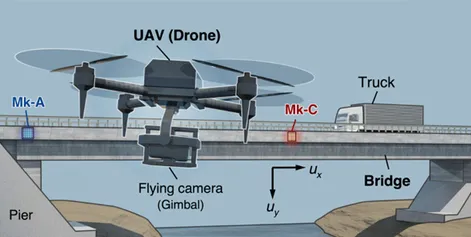
A Review of How Drones Measure Distance and Which AI Models They Use for Detection


What is Generative AI? A Simple and Complete Guide: From AI Basics to Architectures, Examples, Risks, and Applications — For Readers with No Prior Knowledge.

How to build a strong professional network and grow your career with practical techniques and examples for career advancement and professional skills.

What AI models does a physical humanoid robot need? From perception and vision to decision-making, motion control, memory, and safety considerations.

Comments (0)