What Is a Prompt Engineer and How Can You Become an AI Prompt Engineer?
What is an AI Prompt Engineer, what skills are required, and how to enter Prompt Engineering? A complete, practical, and future-oriented guide.
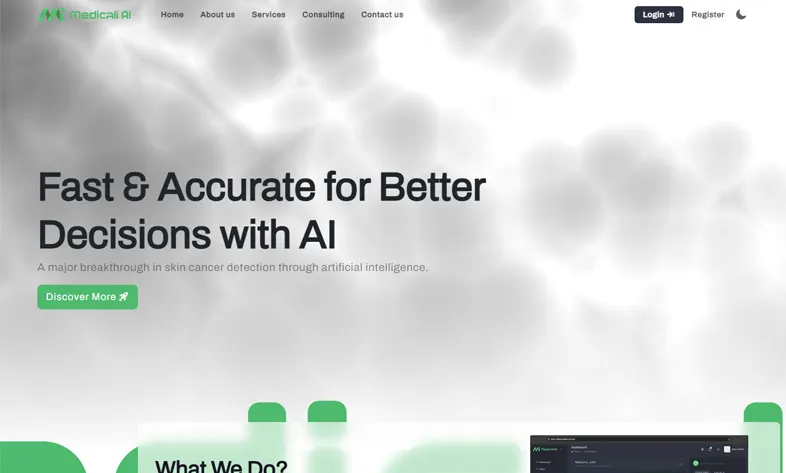
Medicali AI is an advanced artificial intelligence platform that, by rapidly and accurately analyzing skin images, enables the detection of 11 types of skin cancer for doctors and specialists.
This system, with high security, team collaboration features, and comprehensive reporting, facilitates clinical decision-making.
Initial laboratory research accuracy reached 99.93%, and operational experience also demonstrates a reliable performance of 96%.
In the future, this platform will not only diagnose but also predict skin cancer.
The Medicali AI platform, using complex artificial intelligence algorithms, enables fast and accurate diagnosis of various types of skin cancer for doctors and specialists.
This platform is designed to be used collaboratively in clinics and hospitals, with each team member having access to the necessary information and tools according to their role.
Medicali AI can identify 11 different types of skin cancer and, by providing detailed reports and comprehensive analysis, assists doctors in clinical decision-making.
As a medical assistant, this platform offers diverse features, including patient record management, disease progression tracking, full PDF reporting, management of treatment teams and roles, financial and payment systems, as well as technical support and ticketing systems.
One of the important features of Medicali AI is its high security.
Access to different sections is precisely defined, and patient information is encrypted and only viewable by authorized personnel.
These features make Medicali AI not only an advanced diagnostic tool but also a secure and reliable system for healthcare centers.
Before the advent of AI, skin cancer diagnosis was primarily performed using traditional methods.
These methods included clinical examination, dermoscopy, and in many cases, biopsy for tissue sample analysis.
The time required for preparation and analysis could range from several days to weeks, sometimes causing delays in patient treatment.
Moreover, traditional methods depended heavily on the physician's skill and experience, and human error was always a significant challenge.
Accurate diagnosis in cases where skin lesions were very similar was extremely difficult, and error rates could increase under certain conditions.
These limitations created a need for intelligent and fast solutions.
In traditional methods, image and sample analysis was done manually, and no automated tools were available for precise and rapid evaluation.
This highlighted the importance of Medicali AI as a complementary tool, prioritizing speed and accuracy in diagnosis.
Using deep neural networks and advanced algorithms, Medicali AI can analyze skin images in seconds and provide the likelihood of cancer along with its type.
This speed in diagnosis has revolutionized doctors’ workflow and significantly reduced patient waiting times.
Compared to traditional methods that could take weeks for biopsy results, Medicali AI reduces this process to a fraction of the time.
Advanced algorithms can accurately detect edges, colors, and complex patterns in images, helping physicians make faster and more reliable decisions.
Medicali AI covers 11 different types of skin cancer.
This includes both common and rare cancers, with extensive image datasets collected and preprocessed for each type.
For example, each type includes thousands of images selected from the most reputable datasets worldwide and prepared with high precision.
It can be confidently stated that in this process, we have gathered and preprocessed the most complete validated dataset in the world.
These images include samples from various international sources and reputable research centers, with preprocessing including color correction, contrast enhancement, and data normalization.
This process enables the neural network to learn precise lesion features and provide more accurate diagnoses.
With this approach, Medicali AI can consistently perform in real clinical and hospital environments while ensuring broad coverage of skin cancer types.
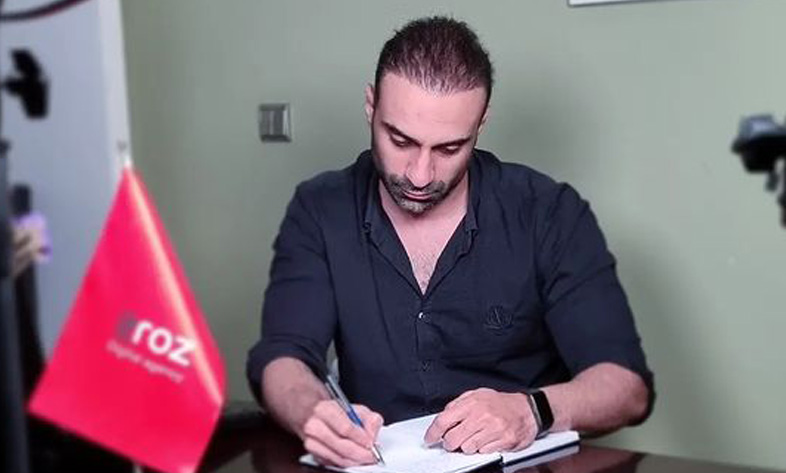
During the development and testing of Medicali AI, Ashkan Mostofi, the designer and programmer of the Medicali AI platform, achieved a high diagnostic accuracy of 99.93%.
This figure reflects the algorithm’s ability to accurately detect skin cancer on the research dataset and must be clearly noted as having a research context.
No international report with this level of accuracy has been published to date, and this result is the outcome of combining extensive data, precise image preprocessing, and advanced deep learning algorithms.
This figure demonstrates that our model can detect complex and subtle skin lesion features with high accuracy.
However, it should be noted that in real clinical environments, the focus is on correct and reliable diagnosis, and research accuracy is not necessarily equivalent to operational accuracy in commercial projects.
The goal is for patients to genuinely benefit from correct diagnoses and for the treatment process to continue with greater confidence.
In commercial projects like the Medicali AI platform, the main focus is on accurate diagnosis and reducing diagnostic errors.
For example, in clinical settings with adherence to clinical standards, we provide outputs that enable practical use and quick decision-making by physicians.
For instance, the platform’s real-world recall in clinical environments is 96%, indicating practical and reliable performance.
This means that out of 100 people, 96 are correctly diagnosed, and the remaining 4 are flagged to the physician if suspicious unless no truly concerning cases are observed.
However, the non-strict accuracy of 99.93% is presented with a higher margin of error, suitable for research conditions but not for real-world scenarios.
This distinction makes it clear to users and healthcare centers that Medicali AI is not a research project, but a practical and reliable tool for diagnosing skin cancer in real-world conditions.
Medicali AI is still at the beginning of its journey, but with strong motivation and a focus on continuous improvement, it is constantly enhancing diagnostic speed and accuracy.
Ashkan Mostofi believes that every advancement in rapid and accurate skin cancer diagnosis can have a direct impact on patients' lives.
In the future, with complete datasets, Medicali AI aims not only to diagnose but also to predict disease progression for physicians.
This capability supports preventive decision-making and enables the delivery of more targeted and effective treatments.
Focus on quality, accuracy, security, and AI enhancement will always be central to the platform’s activities, and the effort to help patients forms the core of Medicali AI.
With a scientific, practical, and human-centered approach, Medicali AI takes a step forward in digital health transformation, with a vision to save more lives and improve treatment processes.
Source » Medicali AI


What is Generative AI? A Simple and Complete Guide: From AI Basics to Architectures, Examples, Risks, and Applications — For Readers with No Prior Knowledge.

What AI models does a physical humanoid robot need? From perception and vision to decision-making, motion control, memory, and safety considerations.

A Review of How Drones Measure Distance and Which AI Models They Use for Detection


Follow the guide to set up your domain email on any device or OS, including both smartphones and computers, quickly and easily.

This guide is useful for automatically forwarding your website emails set up on your domain to other email accounts, such as Gmail and others.

Step-by-step guide to install Thunderbird on macOS; download, setup, and manage multiple email accounts easily and efficiently.

Comments (0)