
Today, with the rapid expansion of enterprise network complexities and the dramatic increase in the volume of exchanged data, traditional methods for identifying cyber threats are no longer responsive to the security needs of businesses.
Cybercriminals, using modern techniques, easily bypass old defensive barriers and infiltrate critical infrastructures, which requires a completely new defensive approach.
Meanwhile, technologies based on machine learning and big data analytics have entered the field as a powerful and proactive solution to uncover hidden patterns.
This fundamental transformation in information monitoring enables organizations to respond with high precision before information crises occur.
To better understand this technological leap and recognize modern tools for protecting digital assets, stay with us in the continuation of this specialized article.
In this article written by “Itroz”, we intend to examine in detail one of the most modern concepts of enterprise network security and illuminate the path for developing modern infrastructures.
In response to what the structure of AI SIEM is, it must be said that this technology is an advanced combination of security event management with powerful artificial intelligence algorithms.
Instead of relying on fixed and predetermined rules, the AI SIEM system accurately identifies completely unknown threats by continuously learning behavioral patterns in the network.
This novel approach reduces the massive volume of false alerts and allows security teams to focus on real dangers.
In fact, this modern architecture has transformed the landscape of cyber defense forever.
Today’s networks generate millions of different events and logs daily, the human and manual review of which is practically impossible and fraught with numerous errors.
This massive volume of information requires a processor that is tireless and capable of discovering hidden connections between seemingly unrelated data in a fraction of a second.
Intelligent technologies, by creating a centralized view, do not examine data in isolation, but analyze them within a comprehensive and integrated context.
This unique capability ensures that the slightest changes in system behavior are quickly identified and reported to network managers.
Using this capability, organizations dramatically reduce incident response time and contain their vulnerability.
Over time, hackers also use intelligent tools to bypass firewalls and antiviruses, so defensive strategies must be correspondingly intelligent and dynamic.
New security platforms, through continuous monitoring, establish a baseline of normal system and user behaviors and record any deviation from it in real-time.
This continuous process ensures that even the most complex attacks cannot hide in the network for long and advance their malicious goals.
Integrating various tools into a central dashboard makes decision-making for IT managers much more transparent, faster, and based on definitive evidence.
Investing in this advanced monitoring field is not a simple choice, but a definitive organizational necessity.
In past decades, information security was limited solely to installing firewalls and simple antivirus software that operated exclusively based on known signatures and fixed rules.
With the rapid growth of the internet and the development of cloud services, network architectures became severely complex, and the need for systems to centrally collect logs was strongly felt.
These early systems, although innovative for their time, caused confusion and excessive fatigue for support teams by generating excessive invalid alerts.
The entry of deep learning algorithms into this arena was a turning point that could extract true meaning and hidden patterns from raw data.
This gradual evolution paved the way for creating fully automated and analytical solutions.
Machine learning allows protection platforms to dynamically adapt to changing conditions without requiring direct programming for each new threat.
These systems are continuously training, and by receiving new intelligence data, they improve their detection accuracy and cover weaknesses.
Machine-based analytics can easily identify highly complex patterns that the human eye or fixed rules are unable to see.
This predictive capability moves organizations out of a purely defensive posture and gives them the power of active and proactive prevention against attacks.
Consequently, security teams can design more comprehensive strategies to protect the entire infrastructure.
One of the greatest achievements of this technological evolution is the creation of a centralized and integrated information architecture at the macro level of large organizations and sensitive work environments.
When data related to network traffic, user logins, and server processing are aggregated at a single point and analyzed with artificial intelligence, no loophole remains hidden.
This structural integration prevents the creation of information silos and creates unparalleled coordination among different IT departments of the organization.
Senior managers, having access to highly accurate analytical reports, can better evaluate existing risks and optimize security budgets.
This technological maturity has currently turned security into one of the core pillars of business development and survival.
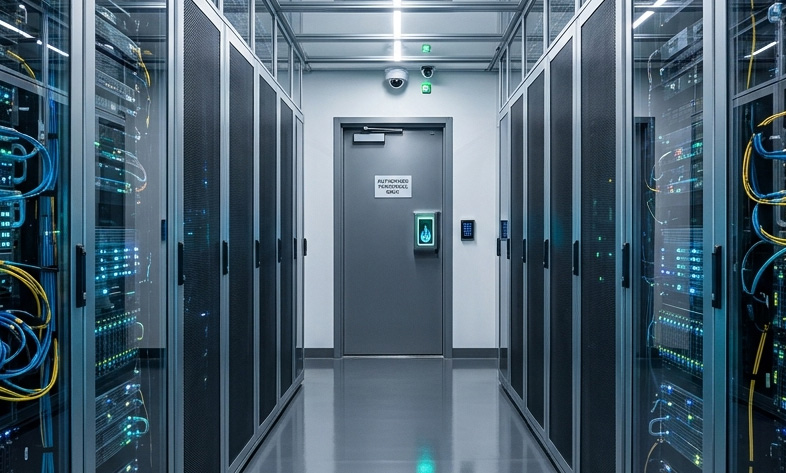
To more deeply understand what the achievements of AI SIEM are, we must look at its unique processing architecture, which is built precisely on the continuous and uninterrupted reception of data.
These intelligent structures receive logs from all devices, software applications, and network equipment and normalize them in a central database.
After homogenizing the data format, advanced analytical engines come into play and begin the process of correlation or discovering logical connections between events.
This novel architecture is designed to process petabytes of information in a fraction of a second without the slightest drop in quality.
The output of this engineered process is alerts with highly accurate prioritization and complete reliability.
The next stage in the operation of these advanced systems is enriching the data using organizational contextual information and reputable global threat databases.
When an IP address or suspicious behavior is identified on the network, the system immediately checks its history in international sources and determines the risk level.
This information enrichment ensures that the final alert is not just a simple error code, but contains all necessary information for tracking and quick response by the response team.
By viewing this comprehensive information within a user interface, analysts will not need manual searching and wasting time to verify the validity of the event.
This automation approach greatly increases the productivity and operational speed of IT departments.
Finally, the architecture of these platforms has moved toward the automation of responses—or security orchestration capabilities—which doubles response speed during crises.
Upon definitive detection of malicious activity, such as a hidden attempt to illicitly extract data, the system can completely and automatically block user access.
These immediate preventive actions, until more detailed human investigation, prevent the spread of damage across various levels of the infrastructure and isolate the network.
The capability to customize algorithms within this architecture allows organizations to tune response policies precisely according to their own needs and structure.
This extraordinary flexibility is considered the golden key in effectively managing complex cyber crises.
One of the most challenging parts of access management in organizations is that a valid user account does not always mean valid and safe behavior at the network level.
Intruders often enter the system by stealing the credentials of authorized organizational individuals and access highly sensitive information without generating usual alerts.
Under these critical conditions, user behavior analytics modules create and store a standard and natural behavioral profile for each account by closely monitoring every action.
Any sudden change, such as logging in from an unconventional geographical location or attempting access during unusual hours, immediately sounds the alarm.
This powerful analytical approach also minimizes the destructive risks of internal threats or hacked accounts.
Detecting suspicious transfer of high volumes of data outside the organization’s network is another highly vital application in the ongoing monitoring of user and system behavior.
If an employee who usually reads only a few simple text files during the day suddenly starts downloading gigabytes of confidential information, the system reacts quickly.
These hidden anomalies, which cannot be identified by static rules and firewalls, are discovered with high precision and in real-time by machine learning.
Checking completely unusual accesses to servers containing sensitive financial and personnel data is also monitored and controlled in this same continuous manner.
Smart focus on individual behavior instead of sole reliance on passwords creates an impenetrable layer in the infrastructure.
Learning the natural patterns of activities is not limited to evaluating human users; the behavior of systems, machines, and servers is also monitored in real-time by algorithms.
If an internal server with a specific task suddenly starts establishing continuous communication with unknown external ports, this pattern change indicates a potential malware infection.
These dual monitorings at the user and system layers ensure that no activity takes place outside the defined frameworks of the organization under any circumstances.
Reducing the risk of data leaks and maintaining the complete confidentiality of customer data is the direct and immediate result of applying this level of advanced monitoring.
Deep intelligence in this section guarantees the survival of the organization’s reputation in today’s tense technology environment.

Effective and efficient monitoring requires that we evaluate events alongside other indicators in a completely continuous manner to have a clear and complete picture of the situation.
Contextual analysis precisely means understanding the surrounding conditions of an alert: who the user is, what the device status is, and how processes relate to each other.
Security data should not be reviewed separately and in isolation, because a seemingly harmless event might be a small part of a complex attack chain.
By conscious tracking and better understanding of all existing indicators on the network, analytical teams can trace the root cause of the problem with much greater speed.
This comprehensive observation forms the basis of continuous operation for smart monitoring platforms.
Modern enterprise monitoring dashboards present network status and notifications with understandable and cohesive visual designs to prevent eye and mind fatigue for the user.
The real-time display of data inflow/outflow, the geographical map of threats, and infrastructure health status in a centralized user interface greatly facilitates complex operations management.
In this continuous and uninterrupted monitoring, advanced algorithms are tasked with filtering background noise and highlighting only valuable and dangerous signals for humans.
This intelligent screening enables security personnel to make decisions with higher focus and confidence and immediately initiate countermeasures.
Data integration in these dashboards is the most important defensive tool against stealthy multi-stage attacks.
High speed in identifying internal and external system threats depends directly on the platform’s ability to synchronize and analyze information at the exact moment an event occurs.
When the processing platform can match firewall events, intrusion detection systems, and server logs in real-time with deep learning patterns, no sign is left out.
Monitoring the integrity of critical files, registries, and configuration settings is also carried out within this smart monitoring so that unauthorized changes are immediately identified and blocked.
This level of operational maturity in monitoring enables the organization to always stay one strategic step ahead of attackers looking for vulnerabilities.
Continuous smart monitoring drastically reduces the costs caused by sudden service outages.
Maintaining and processing security data, which in truth are a very sensitive and vital part of the organization’s strategic assets, is always one of the main concerns of senior managers.
Using external cloud services for log analysis may carry risks such as the departure of confidential information beyond geographical borders and non-compliance with domestic governing laws.
The deployment model within the organization’s internal infrastructure (On-Premise) gives managers the definitive assurance that all data is processed in a secure environment isolated under their own control.
This localized approach reduces the risk of sensitive data leaks outside the organization to zero and maintains 100% data ownership.
Maintaining network privacy at this level is a completely vital requirement for governmental, military, and financial organizations.
Another very key advantage of utilizing internal processing systems is the possibility of accurately adapting analyses to the activity patterns and specific needs of each collection and department.
The security needs of no two organizations are completely identical, and a pre-packaged, general solution cannot respond to the specific complexities of large enterprise networks.
Designing an integrated systems architecture achieves the best and most sustainable result when the platform has the capability to customize algorithms to match native and internal processes.
This extraordinary flexibility causes detection errors and false alarms to be minimized, allowing the system to operate with the highest possible efficiency.
Deploying solutions compliant with native structure is in fact a long-term investment in business sustainability.
Easy and permanent access to the development and direct support team is also among the very decisive parameters in choosing solutions deployed inside the organization’s infrastructure.
Direct communication with a team that has complete mastery over software architecture, information technology, and complex artificial intelligence algorithms makes the implementation path and troubleshooting very smooth and fast.
The maintenance and update costs of these internal platforms are much more logical and cost-effective for the organization’s economy compared to dollar-based licenses of foreign products.
Direct support from creators in the development path guarantees the continuous updating of detection rules and mitigation of new threats with very high speed and quality.
This native technical backing brings lasting peace of mind to managers of sensitive networks.
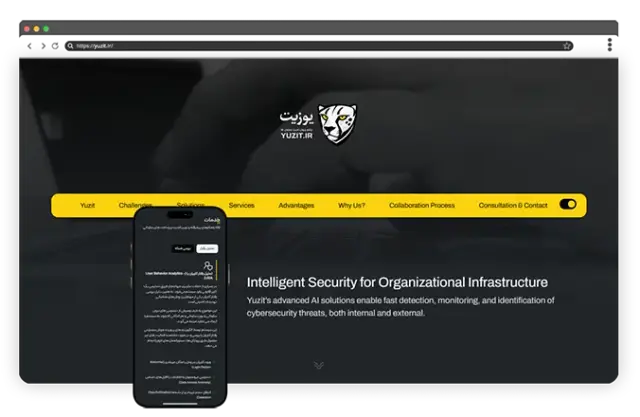
Our central focus at Itroz is built on engineering and redefining modern software products to provide advanced platforms at international standards for businesses.
By synergizing modern scalable web application structures and deep artificial intelligence (Deep AI) layers, we have succeeded in producing very powerful software systems for large domestic organizations.
In this regard, Itroz proudly designed, implemented, and executed at the enterprise scale the first native and unrivaled platform in the field of cybersecurity intelligence in the Iranian market.
This system, with a completely dedicated look at the needs of domestic organizations, fully bridges the gap in access to advanced protective and behavioral analysis technologies.
Our analytical product is the result of long experience in IT development and a deep understanding of organizations’ network concerns.
Itroz Security Platform, utilizing proprietary machine learning algorithms, provides the ability to quickly detect, control, and identify internal and external cyber threats with the highest speed.
The intelligent combination of learning behavioral patterns and integrated monitoring of infrastructure data in this product significantly helps to reveal the most precise suspicious activities that remain hidden from traditional systems’ view.
To better understand the distinct capabilities of this advanced platform, the following engineering specifications can be pointed out as the core of the system:
These structural features show that the Itroz platform operates beyond a simple monitoring tool and stands alongside your infrastructure as an intelligent security engineer around the clock.
The technical and specialized team of Itroz, as the executive and supporting arm of this platform, provides direct and continuous communication across all stages of implementation, user training, and ongoing updates.
Our product’s architectural design is engineered so that its review and integration with the organization’s current systems and network devices are performed with the highest level of software coordination.
The ultimate goal of developing this solution is to increase the security team’s visibility into internal hidden activities and help drastically reduce risks caused by targeted hacker attacks.
Our artificial intelligence algorithms are continuously upgraded and adapted to your organization’s internal patterns so that your network’s defensive shield always remains impenetrable.
We at Itroz are committed to elevating the maturity level of modern software infrastructures in the country.
To better understand the differences and re-answer the question of what the main role of AI SIEM is, we must compare old rule-based systems with modern deep learning models.
In traditional network management methods, a security engineer must define thousands of static rules and conditions for the intrusion detection system to understand what activity is precisely recognized as a danger.
Besides being time-consuming and error-prone, this manual process acts completely blindly, slowly, and defenselessly against zero-day attacks that have no prior history or signature.
However, in the modern machine-based approach, the system itself learns normal conditions automatically by examining billions of network logs and predicts complex attack patterns.
This analytical paradigm shift has severely reduced network dependence on manual settings and human errors.
Old fixed-rule systems usually caused a phenomenon called alert fatigue among IT department personnel due to producing mass amounts of unreal and false alarms.
When an expert receives thousands of unimportant notifications daily, the probability of ignoring a critical attack amidst this volume of information noise is extremely high.
Machine learning technology, through clustering, categorization, and intelligent prioritization of events, displays only those items as critical alerts that truly require immediate human intervention.
This very precise and intelligent filtering dramatically increases operator performance quality and directs their focus toward active and real threat hunting.
The direct result of this is greater organizational productivity and a significant reduction in stress for support teams.
In the field of infrastructure scalability and expansibility, the machine-based analytical approach has also clearly proven its absolute and undeniable superiority over past-generation tools.
With the growth of the organization’s dimensions and the addition of thousands of new devices to the network environment, old logging systems faced processing slowdowns and required very costly hardware upgrades.
However, modern artificial intelligence platforms, utilizing distributed architecture and advanced processing clusters, can easily and without speed loss keep pace with the staggering growth of data.
This fully dynamic scalability allows organizations to expand their technological and communications infrastructure without worrying about traditional monitoring limitations.
Investing in adaptable technologies will bring a more reliable return on investment for businesses in the long run.
Looking at the future of technology clearly shows that the integration of complex networks with artificial intelligence pushes the development path of protective technologies toward a completely automated direction independent of human intervention.
The development of natural language processing and advanced generative models helps systems analyze very complex security reports in simple and understandable language for senior organizational managers.
These breathtaking advancements in data processing will reduce the time from discovery to neutralizing a serious hazard from several hours to a vital few milliseconds.
Organizations that do not move toward implementing these smart and integrated infrastructures today will never have the ability to compete and protect their valuable assets in the future.
The future definitely belongs to platforms that can provide operational solutions before the slightest incident occurs.
Another very bright horizon ahead is the direct interaction of intelligent systems with each other to share data related to cyber attacks at a macro and global level.
If an organization is subjected to a new cyber attack at some point in the world, its defense system automatically extracts the malware characteristics and identifies its pattern.
This analytical information is immediately transmitted to other similar platforms, creating a powerful network of collective defense and integrated immunity for all users.
This structured data exchange multiplies machines’ predictive power against threats and puts hackers in an information dead-end.
The convergence of intelligent defense systems is the ultimate key to countering cybercriminal organizations and modern threats.
The ever-increasing expansion of the Internet of Things and equipping communication networks with the fifth generation will make the attack surface of organizations much wider than the current situation and create new architectural challenges.
In such a vast and intertwined ecosystem, manual traffic management is completely impossible, and only smart algorithms are capable of precise monitoring and control of this volume of uninterrupted machine interactions.
The development of reinforcement learning models allows advanced monitoring platforms to learn from their past mistakes and automatically adopt more complex strategies.
Keeping pace with these rapid technological transformations requires having powerful and reliable technology partners who can provide these tools in a fully localized manner.
We will always remain by your side as a pioneer engineer along the path of this great technological transformation.
Changing the approach from a purely passive defense to proactive threat hunting within the network context is the most important achievement of implementing modern artificial intelligence-based architectures in IT infrastructures.
Organizational managers must accept the truth that relying on old equipment and lacking network data integration turns them into very easy and accessible targets for cybercriminals.
Accurately evaluating the current network status and identifying information blind spots in the internal structure is the first step to starting the path of smartening protective and monitoring processes at a macro level.
Choosing the right tool with high reliability and deployment in an internal environment will guarantee business security and performance stability against digital disaster storms.
The time has come to redesign the organization’s defensive barriers using modern software engineering knowledge.
Organizing incident response teams and continuously training them to work with advanced machine learning-based tools is the necessary next step in completing this major organizational transformation.
Although advanced platforms perform many monitoring and detection tasks automatically, major and strategic decisions in critical moments still rest with human specialists.
The unique synergy between machine speed and human experience in an integrated environment brings the highest level of productivity and risk reduction for the organizational collection.
Allocating appropriate budget for updating monitoring infrastructures must by no means be treated as a running expense, but rather as an essential insurance for asset preservation.
This engineering and forward-looking attitude guarantees your competitive position and reputation in the volatile market.
Finally, to answer the key question of what the main application of AI SIEM is, it can be said with certainty that this technology is the beating heart and mastermind of modern cyber defense.
Using these intelligent tools, comprehensive data monitoring, precise understanding of unusual user behaviors, and very rapid response to organized attacks will no longer be an unattainable dream for IT managers.
Itroz, as a pioneer company in designing smart software platforms, is ready to assist you in engineering and deploying the most secure network environment.
Benefiting from a native and powerful AI SIEM platform with direct support is a bold and reliable step toward preserving your brand’s reputation and permanently protecting the most valuable organizational data against unknown threats.
Source » Itroz Academy
To post a comment, you must first log in to your account.