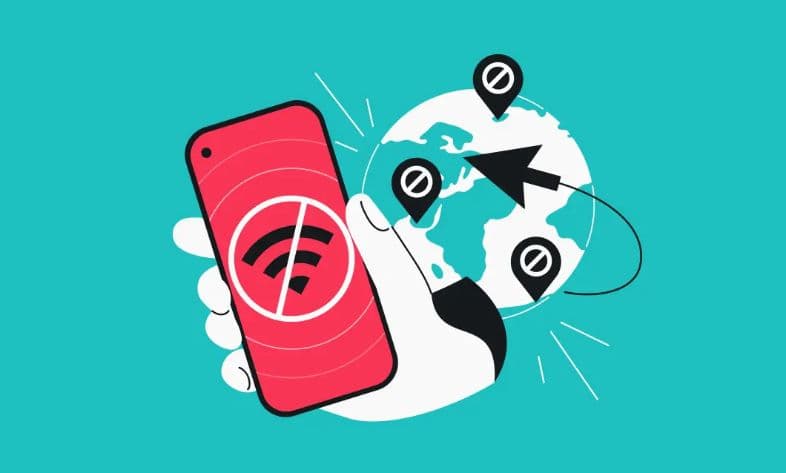
Does restricting international internet access and relying on a domestic network—commonly referred to as a national network—actually increase cybersecurity? This is a question that has been raised seriously in recent years, and answering it requires a precise and comprehensive analysis.
According to the cybersecurity website Yuzit, at first glance it may seem that reducing connectivity to the global internet could lower the level of threats; however, in practice, this issue has far more complex dimensions that must be carefully examined.
A domestic network, or national internet, refers to an infrastructure in which data transmission routes, services, and platforms are managed and hosted within the country instead of relying on external resources.
Simply put, when a user enters a website address, their request is directed to the hosting server through the Domain Name System (DNS). If this process functions correctly, the website will be displayed to the user.
In a domestic network, if both the DNS and the destination server are located within the country, access is possible; otherwise, the user will encounter an error.
Therefore, only websites and services hosted within the country will be accessible, while external resources will effectively become unavailable.
To properly analyze this issue, we must distinguish between two important concepts: internet shutdown and internet restriction.
An internet shutdown refers to complete inaccessibility to the global internet, whereas internet restriction refers to controlled and limited access to certain external resources.
Although these two approaches may appear similar, they have significant differences in practice and lead to entirely different consequences.
When access to the global internet is completely cut off, some external threats naturally decrease.
This is particularly true for simple and automated attacks.
However, this is only one side of the issue. A complete internet shutdown also means losing access to all global services, platforms, and infrastructures.
In such conditions, only a country that is fully independent in terms of infrastructure—capable of meeting all its software and hardware needs without external reliance—can realistically implement this approach.
Otherwise, shutting down the internet will not only be ineffective but will also lead to widespread disruptions in services and infrastructure.
In many countries, including Iran, what has actually been implemented is internet restriction rather than a complete shutdown.
During certain periods, access to the global internet has been significantly reduced, in some cases reaching as low as one to two percent.
Under such conditions, traffic control and management become easier, as most data flows within the country.
At first glance, this may appear to improve security, as it can prevent some basic attacks.
However, it is important to note that advanced and targeted attacks do not rely on simple pathways, and restricting internet access cannot serve as a serious barrier against them.
Such attacks can utilize complex methods, anonymous networks, and advanced tools to reach their targets.
In a country where many services and software systems depend on the global internet, restricting access can lead to widespread negative consequences.
In the short term, this approach may help prevent some low-level threats; however, in the long term, it creates more serious issues.
One of the most critical problems is the lack of access to security updates. Many systems and applications require continuous updates to remain secure.
When internet access is restricted, these updates are disrupted, which can result in the creation of security vulnerabilities.
Additionally, service disruptions and a decline in infrastructure quality are other consequences of this approach.
For example, in the year 1405 (2026–2027), as of the time of writing this article, the internet has been restricted for 54 days to about 99% limited to the national intranet.
Due to the lack of access to the international internet, we have witnessed disruptions in some critical infrastructures, including issues that occurred with Bank Sepah.
Additionally, a large number of government and university websites, according to Zoomit, experienced problems with their SSL security certificates and became inaccessible.
This clearly demonstrates that restricting or shutting down the internet is not a sustainable solution for improving security and may, in fact, increase vulnerabilities.
One of the direct consequences of internet restriction is the increased use of IP-changing tools, commonly known as VPNs.
These tools are often obtained from unreliable sources and can expose users to serious risks.
Using such tools not only threatens individual security but can also reduce the overall cybersecurity level of society.
If the goal is to enhance cybersecurity, the primary solution lies not in restricting the internet, but in strengthening infrastructure and improving system security.
Countries that lead in cybersecurity focus on improving infrastructure, training human resources, and leveraging advanced technologies rather than limiting user access.
By securing infrastructure, a high level of security can be maintained even with full access to the global internet.
Although restricting or shutting down the internet may appear to be a simple solution, in practice it is neither effective nor sustainable and may introduce additional risks and vulnerabilities.
True security depends on investing in infrastructure, maintaining continuous system updates, increasing user awareness, and implementing fundamental cybersecurity practices.
In simple terms, instead of altering the problem, the focus should be on addressing its root causes.
Source » itroz Academy
To post a comment, you must first log in to your account.